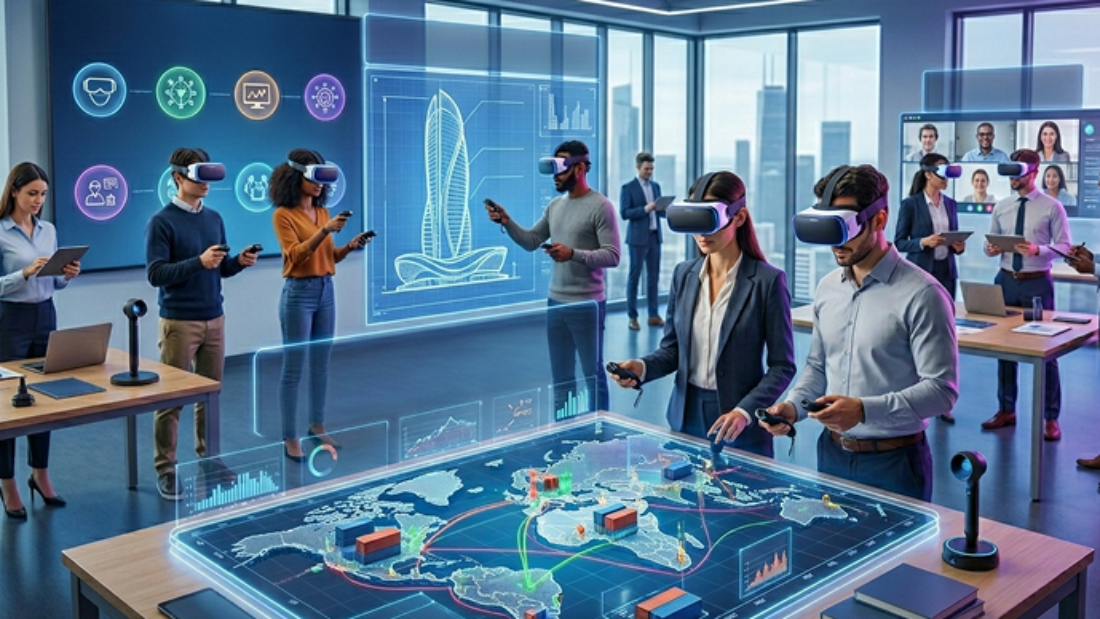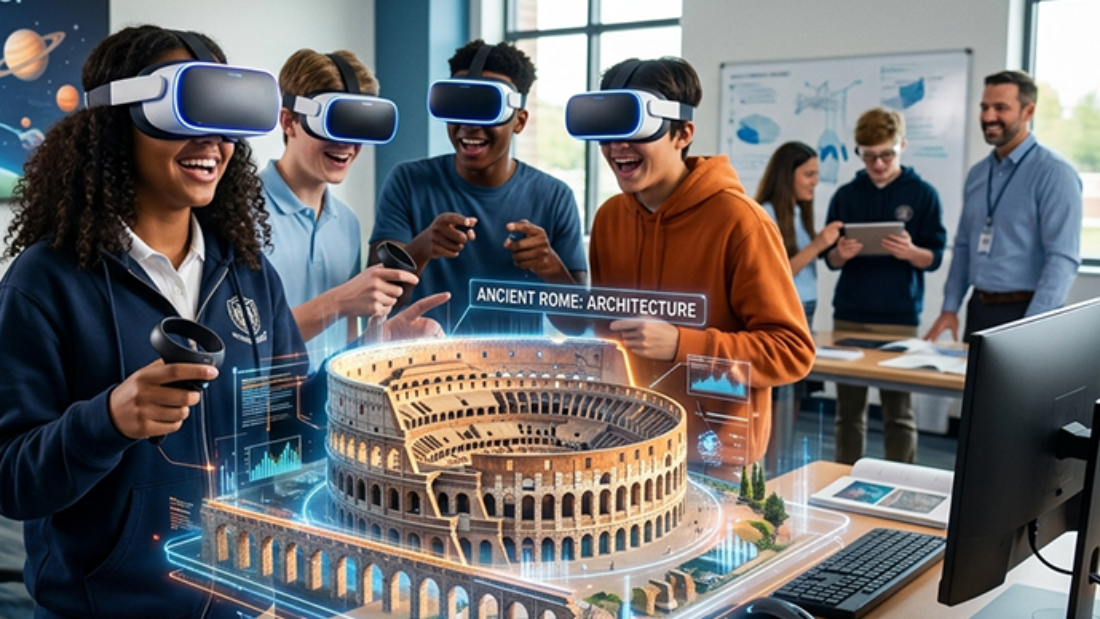
With technology’s increasing hold on education are there new solutions to age-old classroom issues like misbehavior among students. Virtual reality (VR) as a pedagogic and interactive experience is a new paradigm in classroom management. This review article considers the future of VR in reducing behavioral problems by offering distraction-free and controlled conditions where students, especially attention disorder students like ADHD, can concentrate on specific learning. With the use of a simulated virtual real environment, students get to learn social skills, emotional control, and coping strategies within a safe, controlled environment, thereby achieving scholastic and behavioral improvement. Use of VR in classroom management will close the practice theory gap by enabling teachers to acquire a tool that maximizes not only student engagement but also teacher planning. By providing individualized intervention and reducing environmental distraction, VR ensures an even more supportive and accepting learning environment. By empowering teachers to apply evidence-based practices that repair behavior problems by experiential learning and immediate feedback, VR empowers teachers. While promising, classroom use of VR will depend on factors such as teacher training, investment in technology infrastructure, and the creation of educationally sound VR content. As the technology continues to develop, how far it can travel towards perhaps re-making the behavioral management models employed by schools is extremely apparent. Extreme care must, however, be exercised in regard to issues of accessibility, privacy, and long term psychological effects in an attempt to facilitate equal and proper utilization.